Bitcoin Slips Under $84K Amid $487M Long Liquidations
Bitcoin slipped below $84,000 as $487 million in long liquidations shook cryptocurrency markets. The downturn followed massive leverage unwinding, alongside multimillion-dollar digital asset transfers from wallets linked to the US government.


The price of Bitcoin dropped beneath $84,000 as leveraged bullish bets unraveled rapidly, with the bulk of the losses concentrated during a few hours late Tuesday. Bitcoin touched a 24-hour low of $83,647.88 amid a wave of long liquidations that triggered a wider downturn across the cryptocurrency market. Long positions accounted for nearly 97% of the liquidations throughout the most intense four-hour timeframe, while digital wallets linked to the US government transferred $103 million worth of BTC and BNB ahead of the upcoming US midterms.
Bitcoin Price Falls as Long Liquidations Shake Crypto Markets
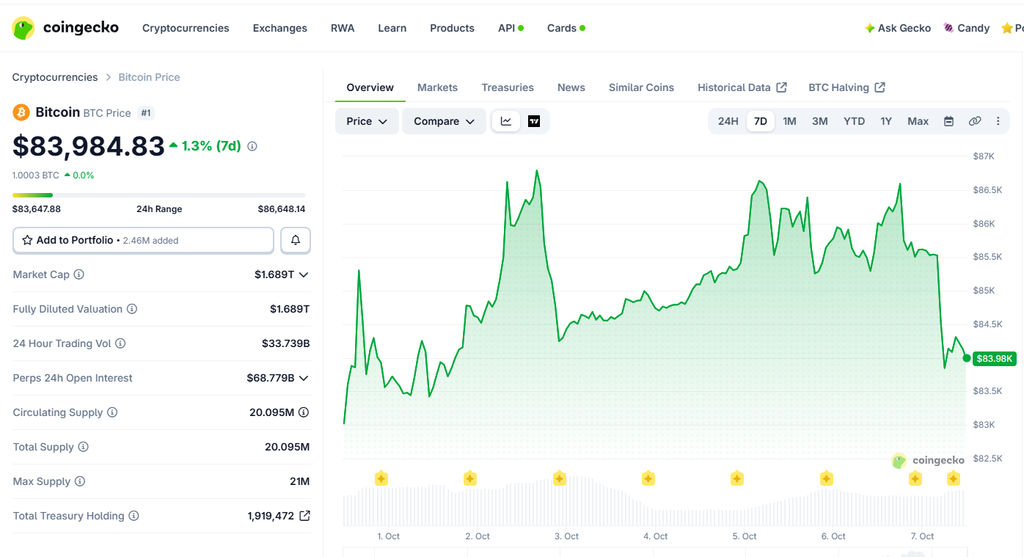
The premier cryptocurrency gave up 1.7% over a 24-hour period to trade at $84,071 by 11:20 p.m. ET on Tuesday, based on data from The Block. Ethereum experienced steeper losses, declining 3.3% to $2,612. At the time of publication, Bitcoin is trading at $83,984 on CoinGecko, staying within a 24-hour span of $83,647.88 to $86,648.14. Despite this recent downward correction, BTC maintains a 1.3% gain for the week.
Bitcoin Long Liquidations Drive The Crypto Market Selloff
Figures from CoinGlass reveal a total of $555.6 million in digital asset liquidations over 24 hours, with $487.2 million stemming from long positions. Approximately $429.8 million of that total evaporated inside a four-hour window, which included roughly $415.3 million in longs.
A liquidation event occurs when an exchange forcefully terminates a user position because trading losses have consumed their available margin. Such forced liquidations can accelerate downward price momentum in an already declining market, turning minor drops into compounding selloffs once key thresholds are breached. Furthermore, publicly available metrics tend to underreport actual figures, meaning total long liquidations could exceed official reports.
Dominick John, an analyst at Zeus Research, stated:
“Bitcoin’s pullback appears primarily driven by profit-taking and forced long liquidations, following a build-up in open interest and funding rates that left the market vulnerable to deleveraging.”
The Crypto Fear & Greed Index registered at 62, remaining in “greed” territory though slipping from 67 the day prior. John noted that this softer sentiment, combined with modest underperformance across altcoins, contributed further downward pressure.
US Government Wallets Move $103 Million Before Bitcoin Price Falls
In the hours preceding the price drop, blockchain tracking tools identified transactions originating from wallets associated with the US government. These addresses transferred 833.6 BTC, valued at $71.56 million, to Coinbase Prime, alongside 40,285 BNB, worth roughly $31.63 million, sent to an unidentified wallet.
Because Coinbase Prime manages both custody and execution services, the incoming transfer could be intended for either purpose. There has been no official confirmation of an immediate sale, and no direct correlation has been established between these transfers and the broader market selloff.
Analysts Weigh Midterms After The Bitcoin Price Falls
Jeff Ko, chief analyst at ViaBTC, shared his perspective:
“Let’s not forget that BTC actually closed Q3 up roughly 40%, alongside $6.5 billion of spot ETF inflows. If the $82,000-$83,000 area continues to hold, I would still view the current price action as a pretty constructive consolidation following the September breakout.”
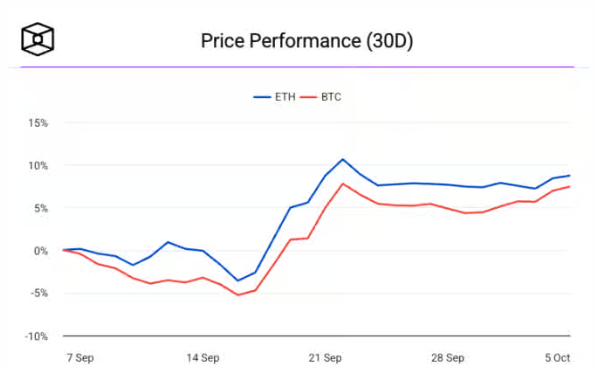
This highlights the $82,000–$83,000 threshold as a critical region of interest for Bitcoin. Additionally, a 30-day performance chart from The Block indicates that both BTC and ETH maintain monthly gains.
With US midterm elections approaching in November, CryptoQuant research highlights that Bitcoin posted gains of 24.5%, 44.9%, and 92.3% during the 12-month periods following the 2014, 2018, and 2022 midterms, respectively. However, the 2018 cycle proved volatile initially, seeing a 45.5% drop in the immediate month following that election.
Although a three-election sample size is limited, macroeconomic factors like borrowing costs and regulatory shifts remain vital considerations. Market participants will be watching to see if buyers absorb ongoing selling pressure, while keeping close tabs on future liquidation clusters, upcoming price dips, and any additional activity from government-linked wallets.
Frequently Asked Questions
01What caused the recent drop in Bitcoin’s price?
The decline was primarily triggered by profit-taking and an intense wave of forced long liquidations, where overleveraged positions were closed out by exchanges as prices dipped.
02How much money was lost in liquidations?
Data from CoinGlass showed total crypto liquidations reached $555.6 million over 24 hours, with $487.2 million coming specifically from long positions.
03Did US government wallet movements cause the selloff?
On-chain trackers noted transfers of $71.56 million in BTC to Coinbase Prime and $31.63 million in BNB to an unlabeled wallet prior to the price drop, but no official sale has been confirmed or linked directly to the market slide.
04What price levels are analysts watching next?
Analysts are closely monitoring the $82,000 to $83,000 support zone to see if it holds as a constructive consolidation range following the previous market breakout.