The Blue Economy: Global Powerhouse and Innovative Cities
The blue economy is experiencing rapid growth, driven by a surge in blue tech funding, maritime innovation, and the crucial role of smart ports acting as hubs for sustainable maritime transformation.


By Alberto Onetti
The “blue economy”—covering industries centered around oceans and coasts, spanning from fisheries and shipping to offshore energy and marine biotechnology—stands as one of the most massive yet overlooked engines driving the global economy.
For startup founders, this dynamic sector presents fresh opportunities to overhaul how we transport cargo, generate energy, and steward marine resources.

In just a quarter of a century, the blue economy has doubled, achieving a valuation of $2.6 trillion. To put this scale into perspective, if it were considered an independent country, it would rank as the fifth largest economy worldwide. As global society looks back to the sea to address pressing hurdles—ranging from geopolitical friction and climbing energy costs to climate resilience—the blue economy is poised to take on an even more central role.
A wave of powerful “blue technology” forces is currently driving disruption. Automation and digitalization, the ongoing energy transition, environmental pressures, and breakthroughs in marine biotechnology are actively redefining how value is generated on the water.
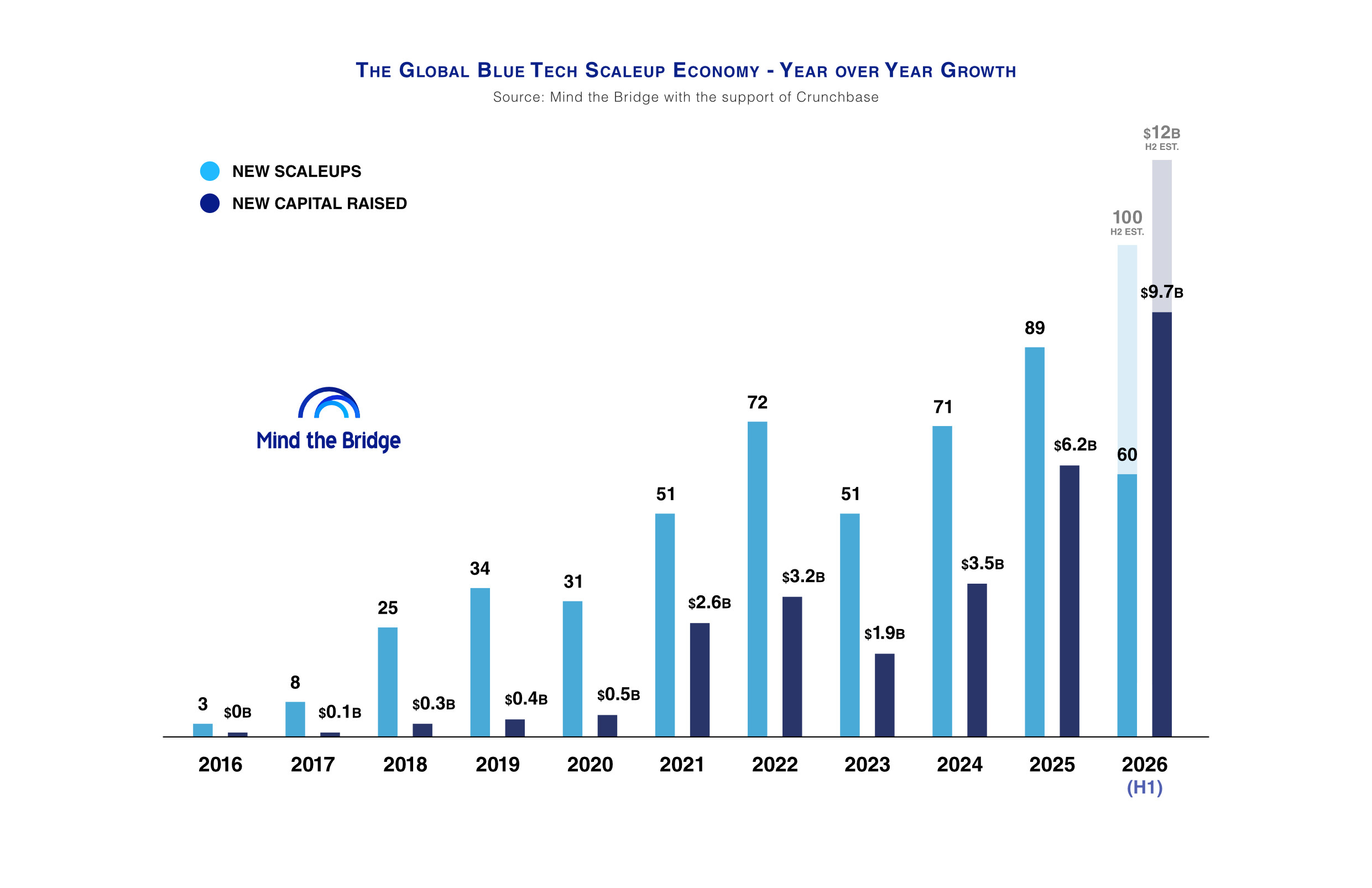
Capital deployment into these sectors is likewise gathering pace, with a strong focus on sustainable growth. According to the “Rethinking the Blue Economy” report published by Mind the Bridge with support from Crunchbase, blue tech companies pulled in nearly $10 billion by the third quarter of 2026, easily surpassing the $6.2 billion recorded across the entirety of 2025. Massive funding rounds secured by defense firms targeting maritime applications drove a significant portion of this growth.

Blue tech: A sector defying global slowdown
Diverging from wider trends seen across the global innovation ecosystem, blue tech has maintained a steady upward trajectory since 2021. It has consistently generated roughly 70 new scaleups annually, accelerating even further over the last two years. Preliminary projections for 2026 indicate that approximately 100 new blue tech scaleups could emerge before the year closes.
This same momentum is reflected in financial metrics. Blue tech funding reached $6.2 billion in 2025, doubling the total from the preceding year. By the third quarter of 2026, global blue tech scaleups had already secured nearly $10 billion in fresh funding. Should this pace hold, analysts expect the sector to surpass $12 billion in total capital by year-end.
The primary catalysts behind this growth? Exceptional maritime resilience agreements involving infrastructure and defense entities such as Anduril Industries, which raised $5 billion in 2026, and Helsing, which secured $1.8 billion in the same year.
Not all blue tech is the same
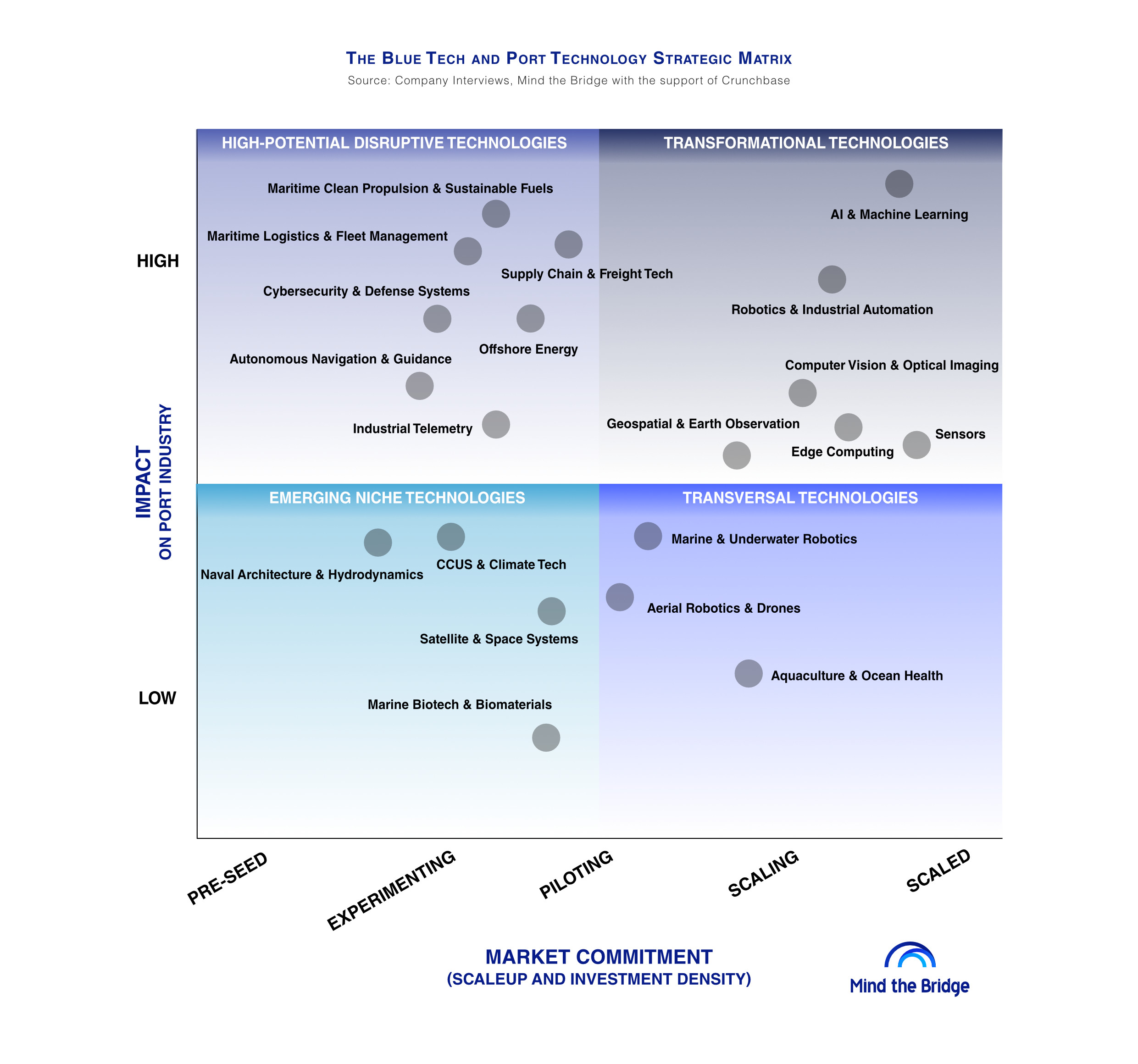
Because blue tech spans a vast category encompassing a wide variety of solutions at different stages of maturity, researchers categorized every unique technology created by blue tech scaleups into 20 distinct groups.
Each group was then evaluated through two specific lenses: its overall industry impact and the level of market commitment it commands—measured by scaleup density and total invested capital.
The resulting matrix highlights:
- Transformational technologies that deliver high impact while remaining relatively mature. Notably, artificial intelligence, machine learning, robotics, and industrial automation sit in a sweet spot characterized by substantial investment, high scaleup density, exceeding 200 scaleups, and more than $20 billion in total funding.
- High-potential disruptive technologies backed by slightly lower investment volumes and scaleup density, typically hovering around 50 scaleups and $3 billion to $5 billion per cluster. Standouts in this tier include maritime clean propulsion, sustainable fuels, supply chain tools, and freight technology.
The remaining quadrants feature transversal technologies with more indirect industry influence alongside emerging niche innovations.
Ports: the ‘smartest smart cities’
Ultimately, a key question remains: Who will successfully capitalize on the wave of change transforming the blue economy?
The straightforward answer: ports.
Ports serve as the focal point where forces reshaping maritime operations intersect most clearly, functioning essentially as mini “blue economies.” In many respects, they represent the ultimate “smartest smart cities”—dense, intricate ecosystems where energy, logistics, information technology, mobility, and people converge. They offer an ideal proving ground where innovations can be tested at scale before being deployed across the broader economy.
Much like smart cities a decade ago, these hubs now require a standardized playbook.
To capture insights directly from the perspective of port operators, the report features interviews with 10 leading global port authorities, detailing their core priorities, operational hurdles, and roadblocks to innovation.
Along the way, the researchers gathered case studies from authorities managing the ports of Barcelona, Bergen, Seattle, Rotterdam, and Los Angeles, establishing them as blueprints for best practices in overcoming the innovation hurdles native to the blue economy.
Ultimately, the findings illustrate the immense potential for blue tech to act as a catalyst driving the radical evolution of one of the world’s most vital economic sectors.
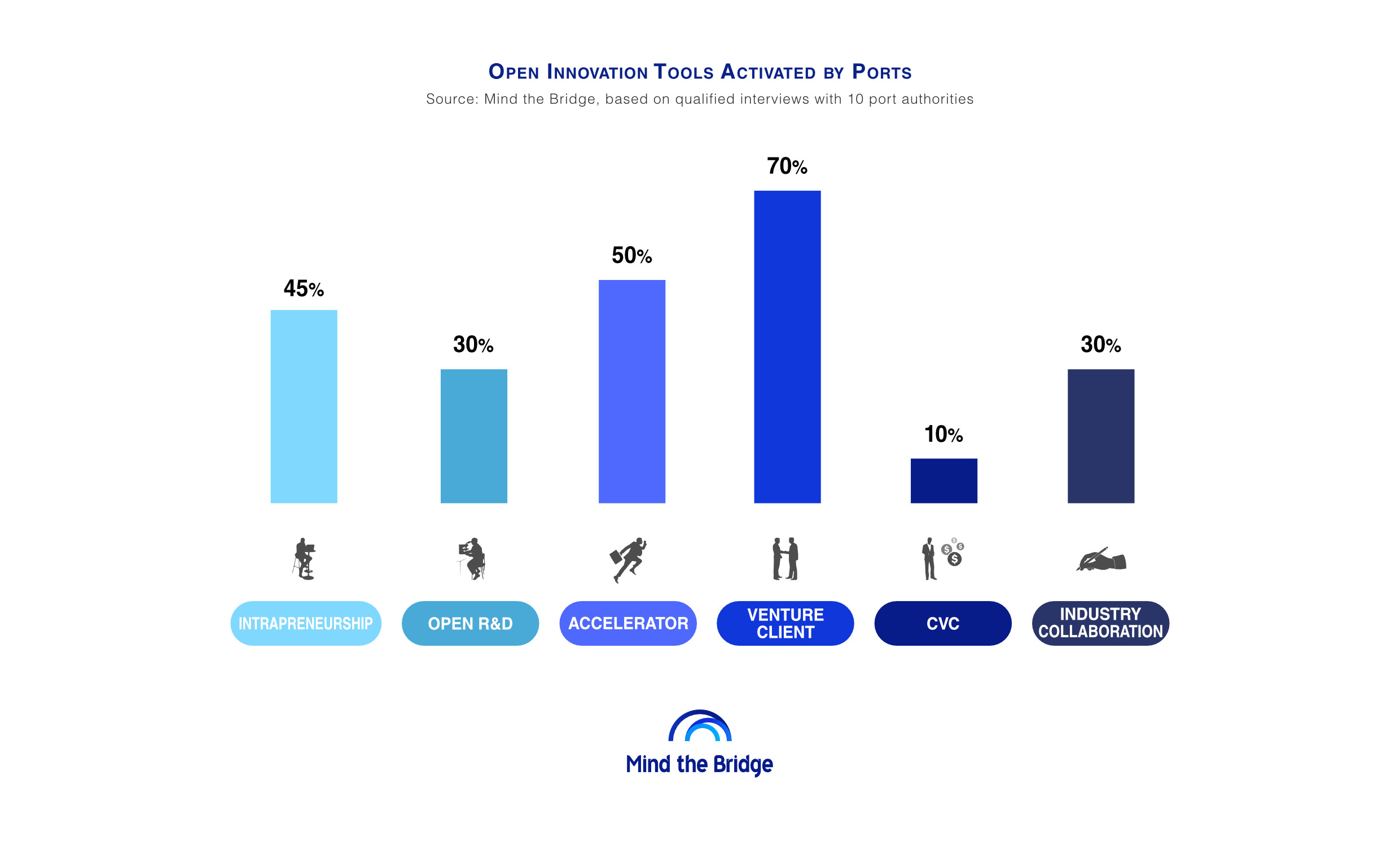
To successfully navigate this shift, most ports are already deploying a variety of open innovation frameworks, often backed by structured strategies and dedicated internal units.
Nevertheless, for port authorities, operators, startups, financial backers, and policymakers to truly reach their goals, they must align around a unified vision and collaborative agenda to tackle shared challenges.
Early yet meaningful steps are already taking shape. A notable example is BlueTechPort, established by the Port of Barcelona as a collaborative innovation ecosystem that unites entrepreneurs, technology vendors, academic researchers, and maritime enterprises. Highlighted thoroughly within the report’s case studies, this initiative is scaling internationally via the Lighthouse International Acceleration Program, which is managed by Mind the Bridge.
For innovators taking to the water, the trajectory of the blue economy is clear. The task ahead is simple: catch the favorable winds and ride them forward.
Get the full story in Mind The Bridge’s report, available for free download here.
Frequently Asked Questions
01What is the blue economy?
The blue economy encompasses all industries connected to oceans, seas, and coasts, including shipping, fisheries, marine biotechnology, and offshore energy production.
02How large is the blue economy currently?
The blue economy has doubled in value over the last 25 years, reaching an estimated valuation of $2.6 trillion.
03What are the primary drivers of blue tech growth?
Growth is largely propelled by digitalization, automation, the global energy transition, environmental sustainability pressures, and major maritime defense and infrastructure resilience deals.
04Why are ports considered important in the blue economy?
Ports function as dense, complex “smart cities” where logistics, energy, data, and mobility intersect, making them ideal testing grounds for scalable maritime innovations.
Alberto Onetti is chairman of Mind the Bridge and a professor at University of Insubria. He is a serial entrepreneur who has started three startups in his career, the last of which is Funambol, among the five Italian scaleups that have raised the largest amount of capital. He is recognized among the leading international experts in open innovation and has wide experience in setting up and managing open innovation projects — venture clients, venture builders, intrapreneurship, CVCs — with large multinational companies, as well as advising and training on this subject. Onetti has a column on Sifted (Financial Times) and several other tech blogs.