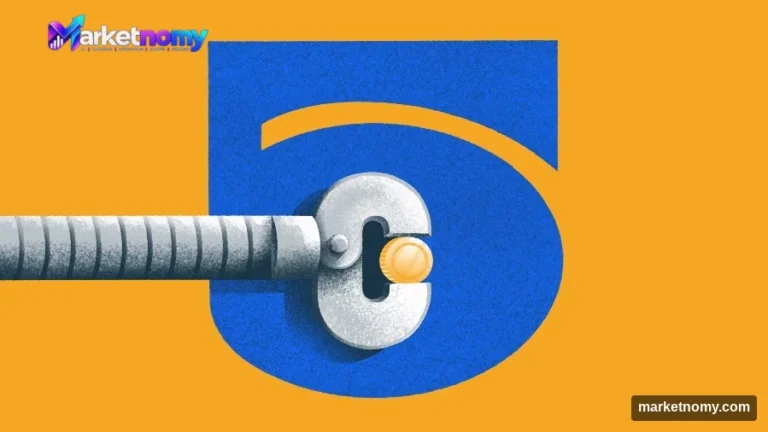
2026 Series A: Faster Capital Flows, But Fewer Startups Qualify
U.S. Series A funding surges by 60% to $42 billion, but transaction volumes remain steady. This polarized environment creates a funding crunch for startups struggling to scale sales.


Greater amounts of capital are flowing into Series A rounds, but this influx is not translating into broader access for more startups. According to Crunchbase figures, U.S. companies secured $42 billion at the Series A stage through October of this year, marking an increase of roughly 60% compared to the same period last year. Meanwhile, overall transaction volumes remain consistent with previous years.
These figures highlight an increasingly polarized early-stage funding environment. Artificial intelligence is driving capital demand and propelling specific startups forward at unprecedented velocities, whereas other companies find it difficult to convert their initial client base into scalable, repeatable sales.
Venture capitalists are reacting by adopting divergent paths: some write substantially larger checks at the seed phase to beat out competitors, while others delay participation until Series B or later phases when business momentum is more definitively proven. (A parallel pattern of fewer yet larger transactions is likewise visible at the Series B tier.)
Consequently, enterprises that are still validating their expansion potential face a Series A funding crunch, even as substantial financial resources pour into the fastest-growing operations.
Over the past five years, 2023 marked the trough for Series A financing, recording $23 billion injected into U.S. startups. Annual Series A investment totals have climbed steadily since, effectively doubling this year relative to 2023.
Simultaneously, the volume of rounds has stabilized, averaging 1,200 funded companies at the Series A level raising $1 million or more annually between 2023 and 2025. This pattern persists currently, with round counts landing within that exact bracket, fluctuating by roughly 100 deals.
“On the application side, it’s a bit harder, and that’s where I think there’s more of a Series A crunch,” explained Siddharth Ramakrishnan, a partner at Scale Venture Partners, which primarily oversees Series A and B transactions.
This dynamic—characterized by steady deal volumes despite a massive surge in available capital—is actively shifting how early-stage venture capitalists deploy funds.
Go big and early — or wait
Competition among investors has intensified, particularly within the early-stage landscape. As a result, venture capitalists increasingly lean toward one of two contrasting strategies: issuing much larger checks much earlier, or holding back until subsequent financing rounds, noted Ramakrishnan.
Regarding the initial approach, check sizes are expanding significantly, with seed investments ranging between $10 million and $20 million becoming commonplace. “Instead of waiting till the Series A, where they have $4 million in revenue and growing, you’re going to do it when they have $500,000 in revenue, they have a pilot, the team is smart,” he stated.
Conversely, alternative investors choose to delay their entry. “ ‘I’m not getting any new information by the time they’re at $2 million in revenue from $500,000, so I’m just going to wait until they actually take off,’ and then you’re seeing a gap,” Ramakrishnan remarked, detailing the rationale behind this methodology. “People are putting in a lot of money at the Series B, Series C onwards, because that’s when you get the signal that things are really working.”
Scale anticipates managing slightly higher variance across its current fund. The firm prefers maintaining traditional Series A and B risk profiles by “potentially pulling a little bit earlier and a little bit later and recreating it in the aggregate,” he mentioned.
The firm’s most recent vehicle, Fund 8, stands as its largest to date at $900 million, surpassing its predecessor fund of $600 million.
“We still think that Series A is a great place to be if you can make it happen, because it’s at that point where you ideally have enough information to make an informed bet, but not enough that there’s still some of the growth investors that are scared to come in,” Ramakrishnan observed, “and so you get great companies at great prices.”
Deals sizes trend higher
Crunchbase metrics indicate that across every quartile, U.S. Series A rounds have grown larger this year. Thus far in 2026, 10% of all Series A transactions reach or exceed $75 million, up from $50 million in 2025.
Such oversized checks drive hypergrowth for select enterprises. “Instead of going zero to $7 million, which in the old world would have been amazing numbers, now there’s people going zero to $20 million, or zero to $30 million,” Ramakrishnan noted.
Raising a large Series A
For entrepreneurs, securing these expansive allocations frequently depends on translating a handful of early customers into a structured, repeatable sales workflow. Numerous startups stall during this transition phase, even while investors fiercely compete to support those that successfully break through.
“If you have the ambition to build a world-class company, then you also need to raise a big Series A to expand and go abroad, take on different types of markets,” shared European seed investor Anke Huiskes of NP-Hard Ventures, whom the author interviewed on stage at the HumanX Amsterdam conference on AI earlier in the year.
“I think the whole messy phase is in this go-to-market phase where you don’t really know who your ideal customer profile is,” said Huiskes, an investor focused on product-driven seed founders.
She has observed startups becoming trapped when they acquire a limited client base but fail to scale rapidly. “A lot of the companies hang out here,” she stated.
However, for enterprises that successfully establish a repeatable sales engine, venture capitalists reach out eagerly, she added: “And then I get a text, ‘Can you please give me an intro?’ And all of a sudden, I have 10 term sheets. So it’s really black and white.”
Related Crunchbase queries:
- US Series A Funding, 2026
- US Series B Funding, 2026
Related reading:
- Series B Funding Is Up, But Fewer Deals Are Getting Done
- Jumbo Series A Rounds Hiding The Real Squeeze On Seed Startups
- More Money, Fewer Checks: These 3 Charts Show The Divide Behind VC’s Record Funding Year
Frequently Asked Questions
01Why is total Series A funding increasing while deal counts stay flat?
More money is being poured into select high-growth startups—particularly in artificial intelligence—driving up the average size of rounds and total capital invested, while overall deal counts remain steady due to stricter investor selectivity for other companies.
02What are the two opposing strategies VCs are using in early-stage investing?
Investors are either writing much larger checks much earlier at the seed stage to get ahead of competition, or holding back to invest in later rounds like Series B and beyond once a company’s business model is clearly taking off.
03What challenges do startups face when trying to secure a large Series A?
Many startups struggle to transition a handful of early customers into a repeatable, scalable sales process and often find it difficult to precisely define their ideal customer profile during the go-to-market phase.
Illustration: Dom Guzman